Uberpool

March 2025

UX Design, UX Research

UberPool didn’t quite work in India. Despite its promise, users hesitated to opt in. Meanwhile, alternatives like BlaBlaCar suffer from lack of verification and safety, which makes people wary of using them, especially solo riders.
Overview

Ride-sharing seems like the perfect solution for Indian cities - it saves money, reduces traffic, and promotes sustainability. But in reality, it hasn’t taken off

My goal was to design a solution leveraging Uber’s existing strengths to offer a shared ride option that users can opt into after they’re already on the journey, giving more control, reducing anxiety, and while also preserving trust

The Problem

UberPool in India failed to scale up for a few key reasons:

  • Riders don’t want to commit to a shared ride before knowing who else is in the car

  • There’s a fear of delays due to detours and pickups

  • Upfront pricing for pooled rides didn’t always feel like a good deal

  • Trust is a major issue - users don’t want to share space with unverified strangers

Apps like BlaBlaCar aimed to solve the same problem but lacked the verification, safety checks, and platform trust needed to build confidence, especially in urban solo travel.

Design Process

A Better Way: Dynamic Carpooling within Uber

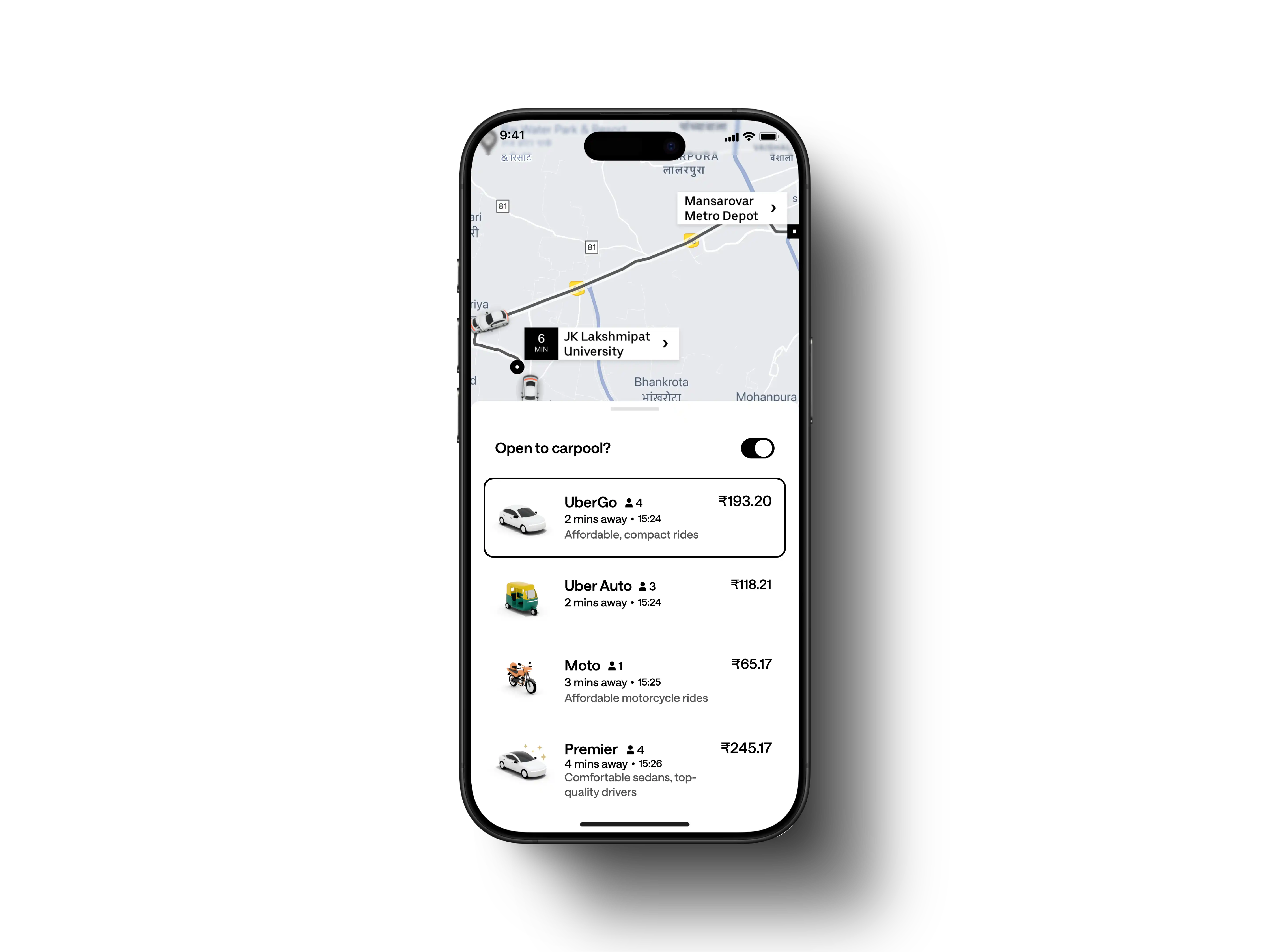
Dynamic Carpooling gives riders the option to toggle “Open to Carpool” at the time of booking, but the ride starts as a private trip. If a match is found during the ride with another verified rider on a similar route, Uber notifies the user and lets them choose whether to accept.

The best part? Uber already has what most carpooling apps don’t, a strong verification system, real-time trip tracking, and a reputation for safety.

What if Uber gave riders more control and confidence?

Digital Design

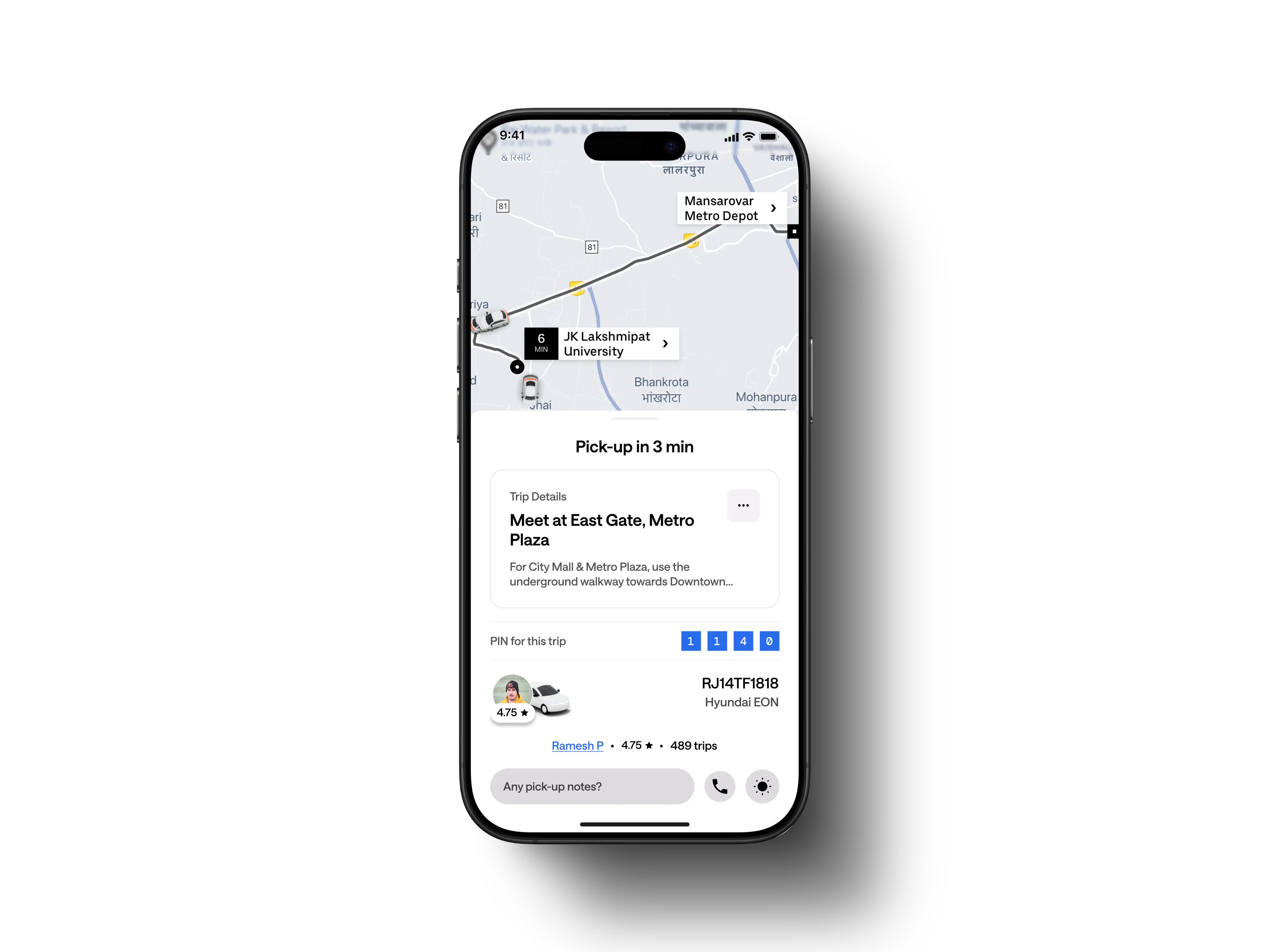
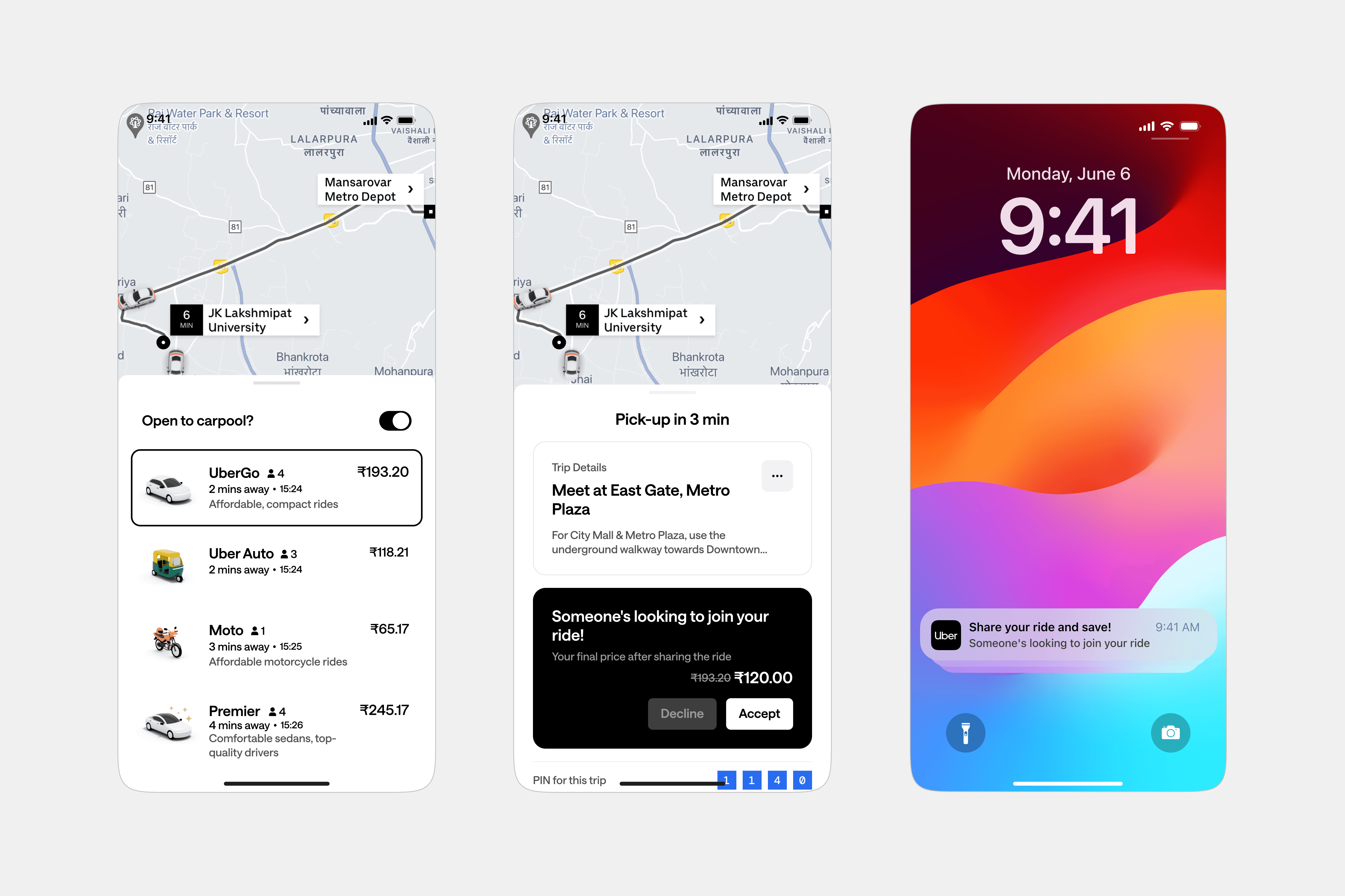
Booking Phase - Users toggle 'Open to Carpool?' before booking. No impact on their initial fare or ETA


The ride begins as a private trip. If another rider enables carpooling and their route aligns, the system finds a match


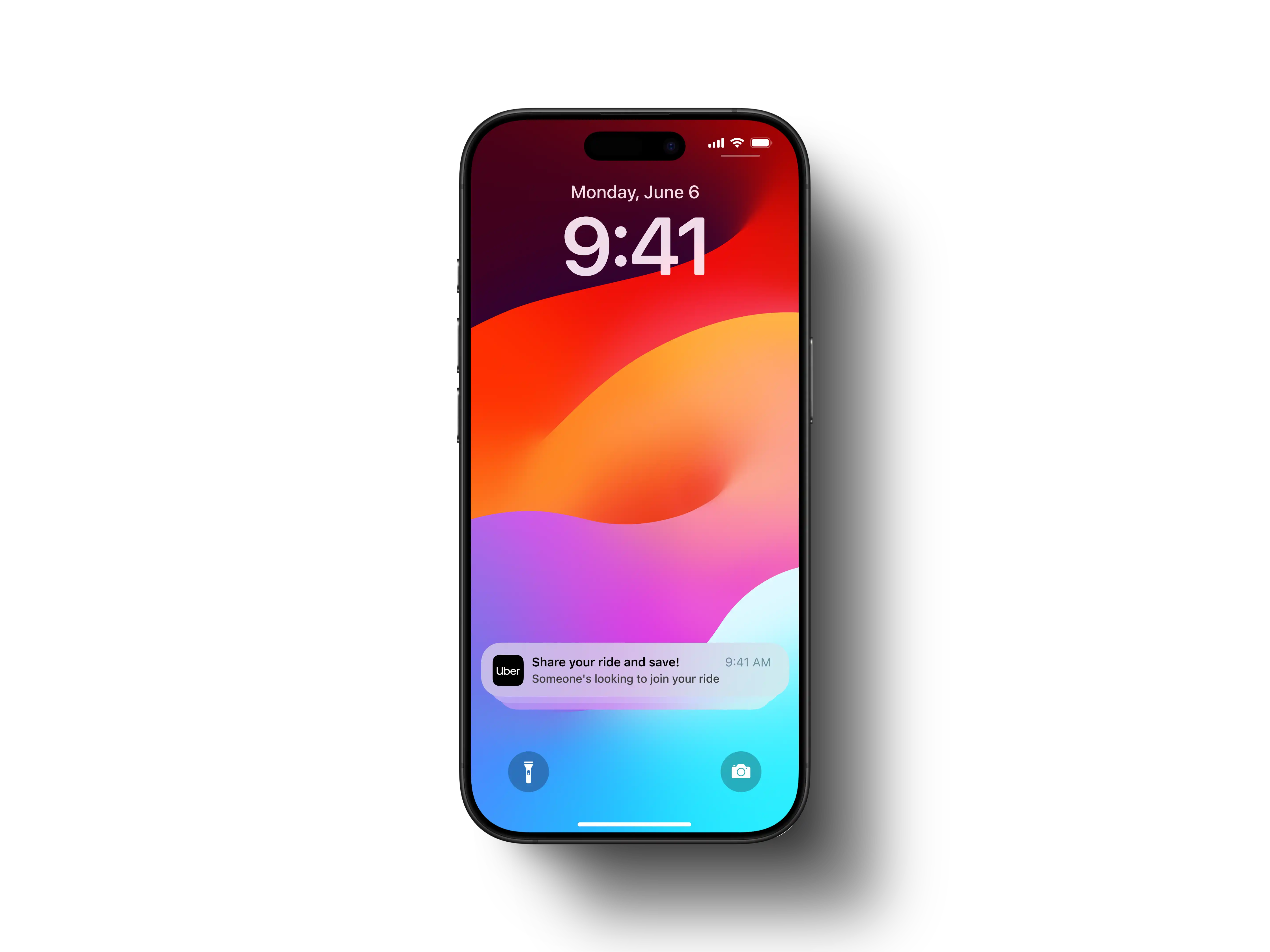
A push notification appears on their lock screen when there is a match. Riders can tap to open the Uber app and review details


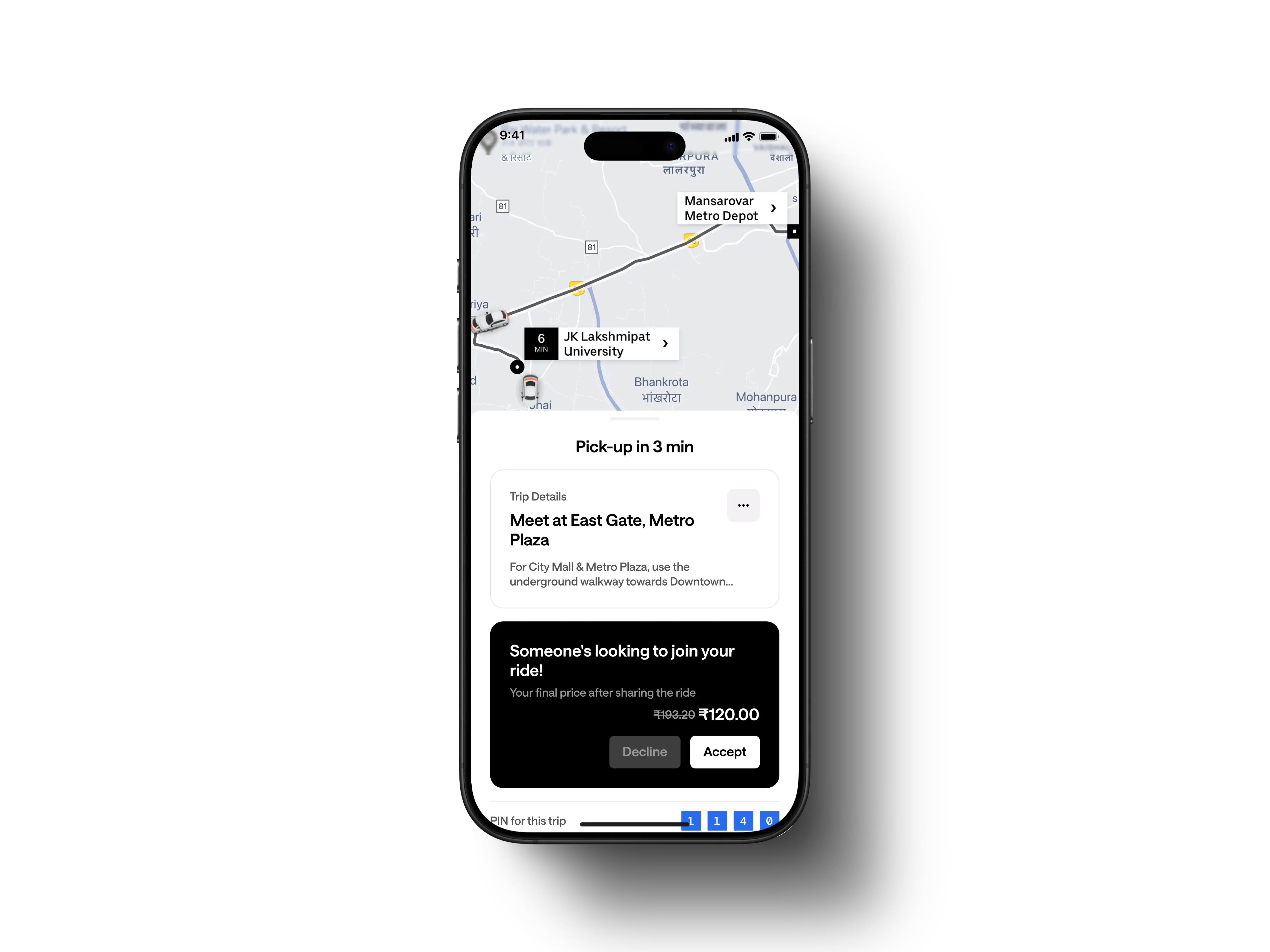
A popup prompts that someone is looking to share the ride. New fare after sharing is displayed. Accept and Decline buttons are shown to the user for quick decision making


To embed a website or widget, add it to the properties panel.

Conclusion

Why this works?


  • Built on Trust - Uber already has verified users, driver ratings, and live tracking unlike most carpooling app

  • Gives Control - Riders start solo and choose to share only when they’re comfortable and satisfied with the adjusted fare

  • Saves Money - The system incentivizes sharing with live discounted fares

  • Boosts Sustainability - Every shared ride reduces empty seats and traffic load

India doesn’t need more ride-sharing apps. It needs smarter ways to share. With Dynamic Carpooling, Uber can bridge the trust gap that killed UberPool and outdo players like BlaBlaCar by turning shared mobility into a choice, not a compromise.

Smooth Scroll
This will hide itself!
Smooth Scroll
This will hide itself!
Smooth Scroll
This will hide itself!