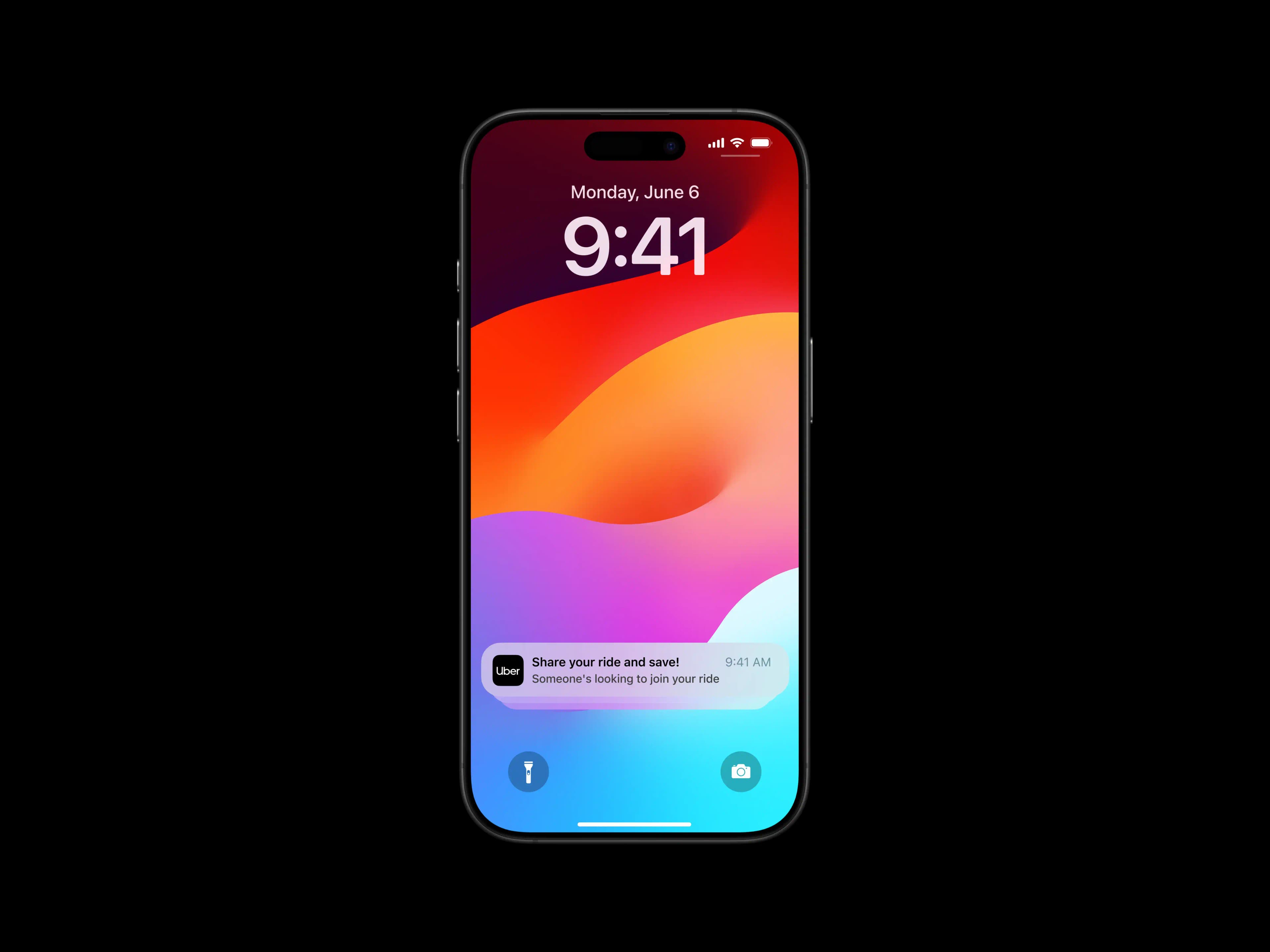
The Problem: The Exhaustion of Daily Coordination
The single biggest friction in consumer carpooling is not the price or the vehicle—it is the cognitive tax of daily coordination. Unlike private taxi services where dispatch is instantaneous on demand, carpooling requires mutual scheduling between two working professionals.
In user diaries, we observed a punishing daily ritual:
- At 8:15 PM every Sunday and weekday evening: Riders had to remember to open the app, search for drivers matching their exact departure window, inspect multiple profiles, send three to five individual ride requests, and anxiously wait for responses.
- Drivers received a barrage of individual requests: They had to decipher route detours, calculate whether accepting Rider B would conflict with Rider A, and manually tap accept or decline while preparing dinner or driving.
If a rider forgot to request a ride the night before, they woke up to an empty marketplace and were forced back into expensive surge cabs. Commuters loved carpooling when it worked, but 64% churned within six weeks due to "booking fatigue."
The Dual-Sided Auto-Request Architecture
To solve this for both sides of the marketplace, we designed a synchronized auto-matching engine: Auto Request for Riders and Auto Matching for Drivers.
1. Auto Request (Rider Side)
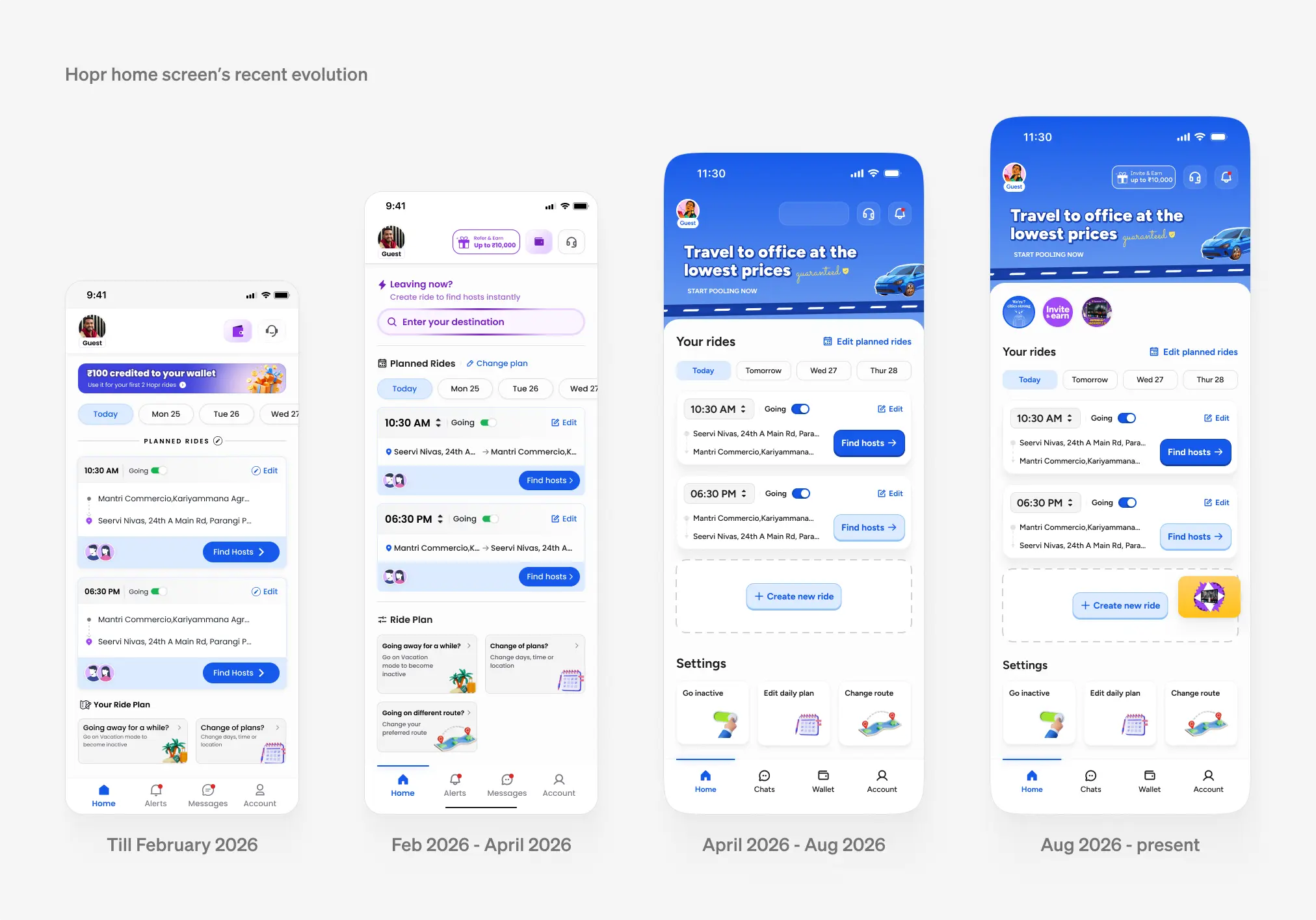
Riders configure their recurring weekly commute pattern once:
- Designated office days (e.g., Monday, Wednesday, Thursday).
- Preferred departure windows (e.g., 8:45 AM – 9:00 AM) with flexible ±10 minute buffer tolerance.
- Co-rider preferences (verified company badge, gender-specific pool preference, quiet commute tags).
- Max acceptable walking handshake distance (e.g., up to 250 meters).
Every evening at 7:00 PM, the system scans pre-scheduled driver routes along the corridor, scores them by detour efficiency and mutual social affinity, and automatically dispatches optimized requests on the rider's behalf.
2. Auto Match & Reservation (Driver Side)
For drivers who commute along identical routes daily:
- Drivers register their fixed morning and evening departure times and the number of empty seats available (1–3 seats).
- When high-confidence matches (zero detour or under 3-minute walking handshake) are identified, the system auto-reserves the seat and notifies the driver with a summarized morning itinerary.
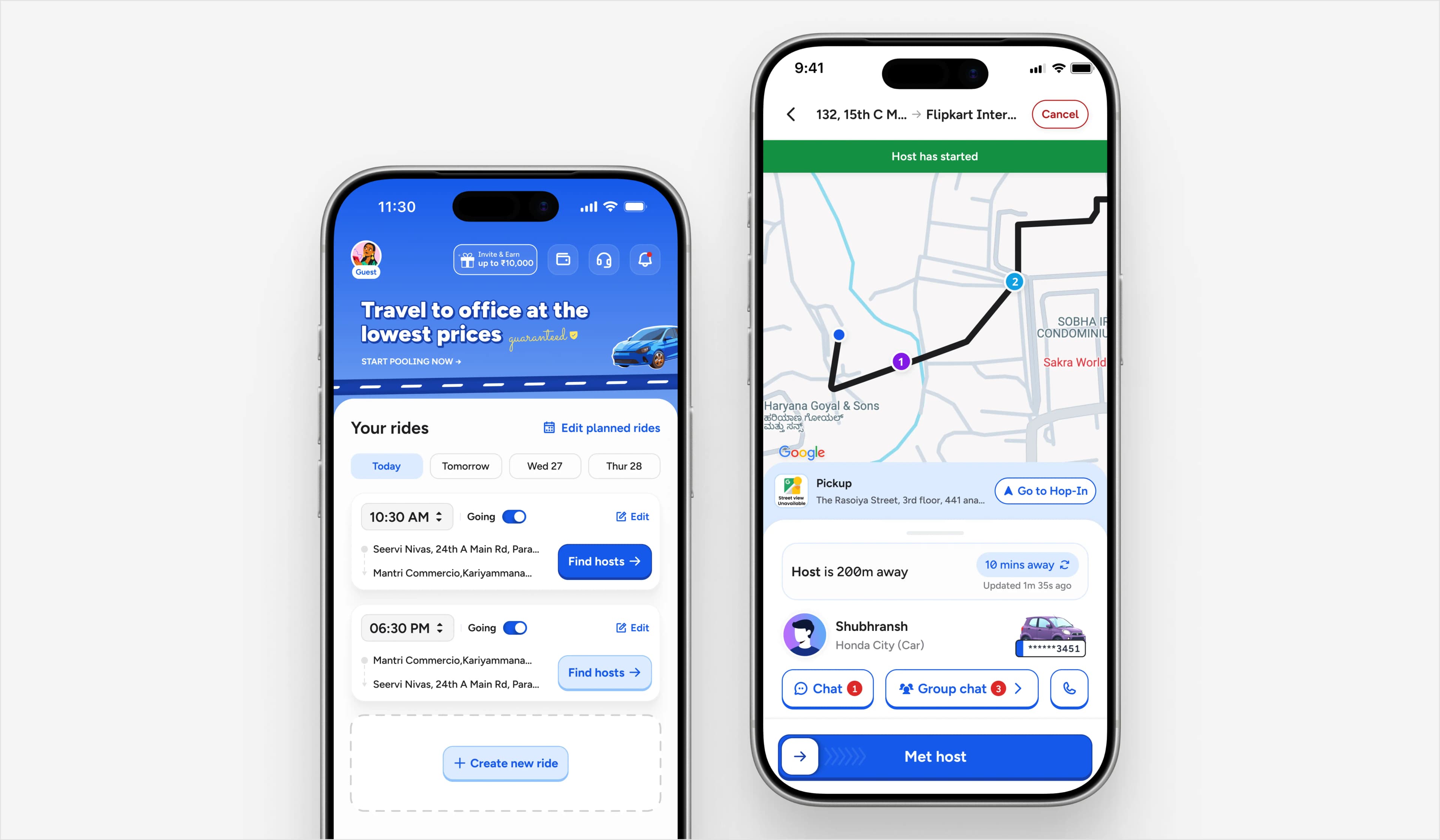
Dual-sided auto-request setup flow and automated evening match confirmation cardSafe Failsafes and Friction-Free Cancellations
Automated booking is only viable if users trust that they won't be trapped in rides when plans change. We built robust failsafes into the core interaction:
- Calendar & Holiday Integration: Auto Request syncs with local public holidays and corporate office schedules, automatically pausing requests on non-working days.
- Silent 45-Minute Opt-Out: Users can snooze or cancel any auto-matched commute with a single tap up to 45 minutes before departure with zero cancellation penalty or rating friction.
- Affinity Fallback Queue: If a preferred regular driver is taking leave, the algorithm seamlessly cascades the request to secondary verified coworkers along the same corporate campus route.
Key Design Decisions & Trade-offs
Predictive Auto-Confirmation vs. Manual Confirmation Step
ShippedRationale: Manual confirmation defeated the purpose of automation
Initial prototypes sent push notifications asking users to confirm their automated match every night. 41% of users missed the notification and lost their seats. We switched to default auto-confirmation with an explicit opt-out model, increasing fulfilled rides by 68%.
Rigid Monthly Subscription Pass
GraveyardRationale: Failed to adapt to modern hybrid corporate work habits
We tested a fixed monthly carpool pass requiring upfront payment for 20 workdays. Hybrid corporate employees overwhelmingly rejected it because their office attendance varied week to week. Auto Request operates on pay-per-commute credits, matching real-world flexibility.
“Commuting shouldn't be a second job. Auto Request turned carpooling into an invisible utility that just works when you wake up in the morning.”
Business & Behavioral Results
Following the introduction of Auto Request, average monthly completed rides per active commuter jumped from 4.2 to 14.8. Most importantly, organic driver retention stabilized as drivers could rely on guaranteed, predictable seat utilization throughout the work week.