The Problem: The Elevated Expressway Dilemma
In hyper-congested cities like Bangalore, elevated flyovers (such as the 10-kilometer Electronic City Expressway or the Outer Ring Road elevated corridors) are the lifeblood of long-distance commuters. Taking the flyover allows a car to bypass 45 minutes of bumper-to-bumper surface road chaos, traffic signals, and pedestrian intersections.
However, elevated infrastructure introduces a severe logistical bottleneck for carpooling:
- Zero Stopping Allowed on Flyovers: Once a vehicle ascends an elevated expressway ramp, stopping or pulling over is strictly illegal, dangerous, and penalized with hefty traffic fines.
- The Surface Penalty: If a driver descends to surface level to pick up a passenger, they are plunged into gridlocked service roads. Re-entering the flyover can take 20 to 30 minutes of additional detour time. Consequently, drivers rejected 91% of carpool match requests that were located near flyovers, despite being geographically along their path.
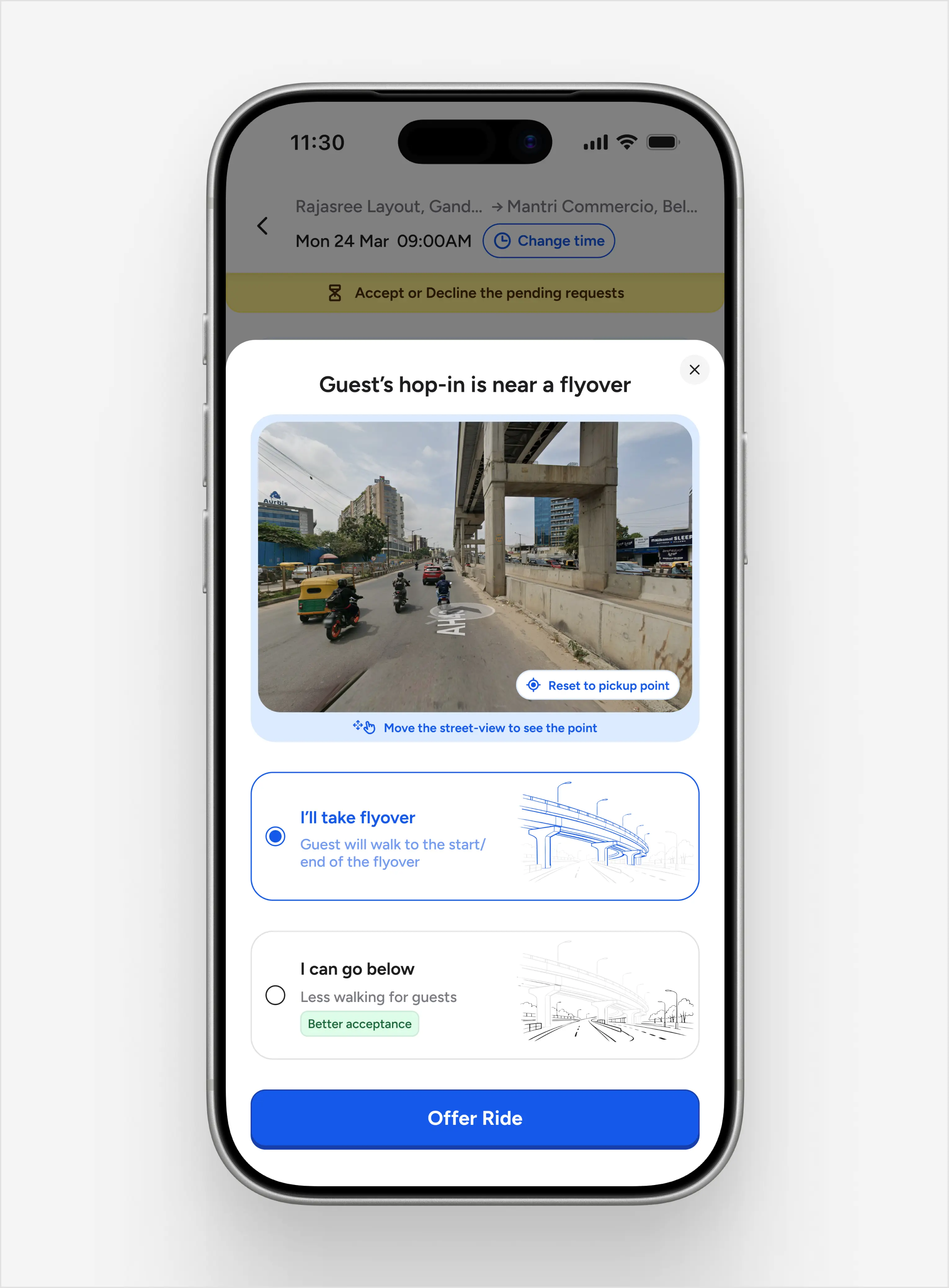
We launched the "Flyover Hop-ins" initiative to answer a critical spatial question: Can we coordinate safe, compliant pedestrian pick-ups at designated ramp entry pockets immediately before vehicles ascend the elevated expressway?
Engineering the Pre-Ramp Rendezvous Node
We set out to replace ambiguous street pins with hyper-precise Spatial Staging Bays.
1. Geofenced Entry-Ramp Staging Pockets
Working with satellite imagery and on-the-ground spatial surveys, we identified 14 municipal service road pull-in pockets located 50 to 120 meters before flyover ascent barriers.
- Each pocket features physical curb space, adequate street illumination, and separated pedestrian sidewalk access.
- Pickups were algorithmically restricted to these pre-vetted geographic nodes; riders could not move the pin to unsafe highway shoulders.
2. Synchronized Arrival HUD & Audio Countdowns
Because idling on approach ramps causes severe traffic disruption, pickup synchronization had to be millisecond-precise:
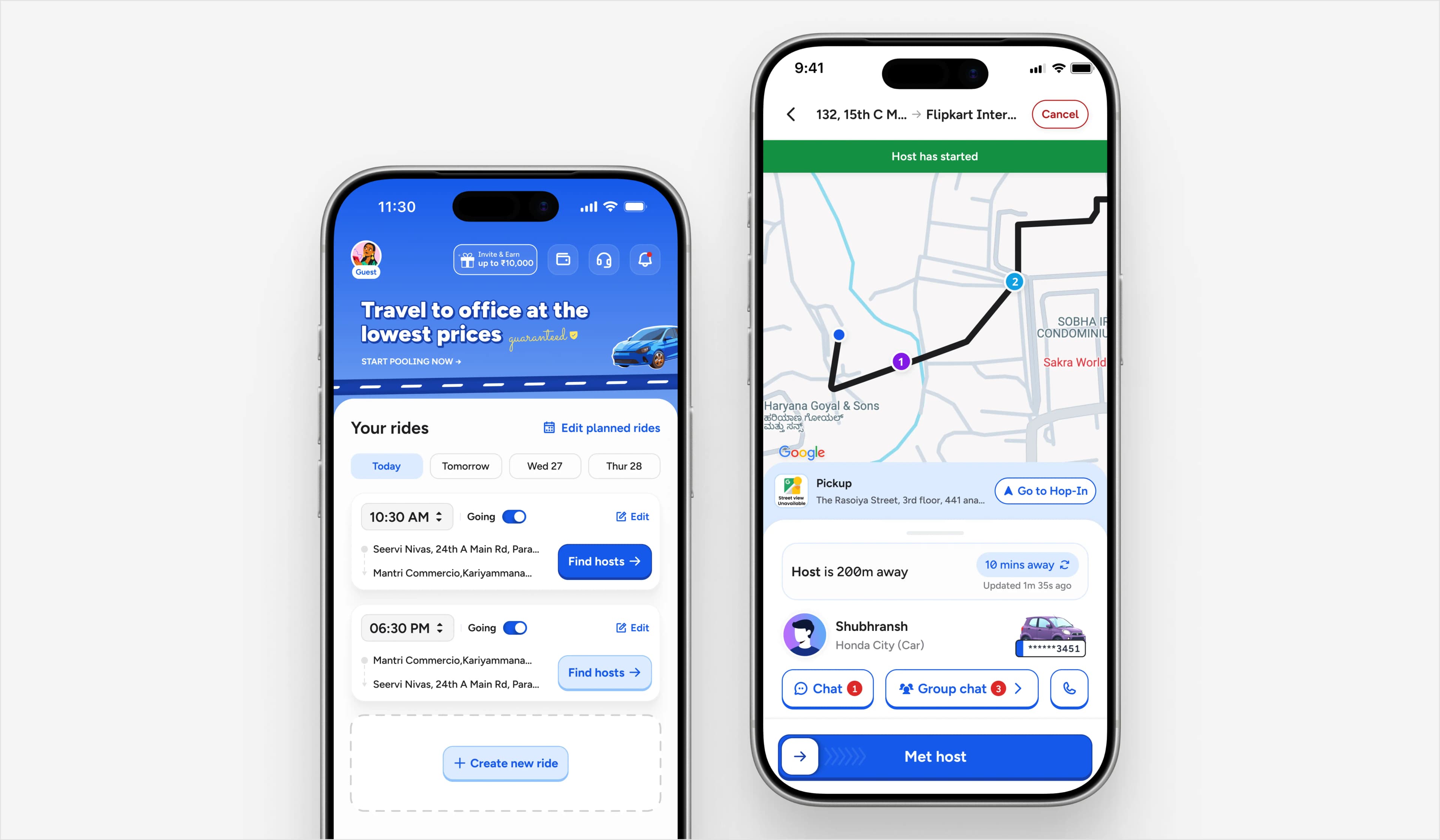
- The driver UI displayed a specialized Ascent Countdown Meter: "Approaching Ramp Bay: 400m / 45s".
- The rider received synchronized haptic pulses and prominent visual instructions to stand at the marked physical bay signpost before vehicle arrival.
3. The 30-Second Abort Protocol
If the rider had not confirmed their presence at the staging bay by the time the vehicle crossed a 100-meter threshold:
- The app automatically triggered an Abort & Ascend Protocol.
- The driver was instructed to proceed straight up the flyover ramp without stopping.
- The stranded rider was automatically re-routed to the next available vehicle or refunded without delay, protecting highway traffic flow and driver safety.
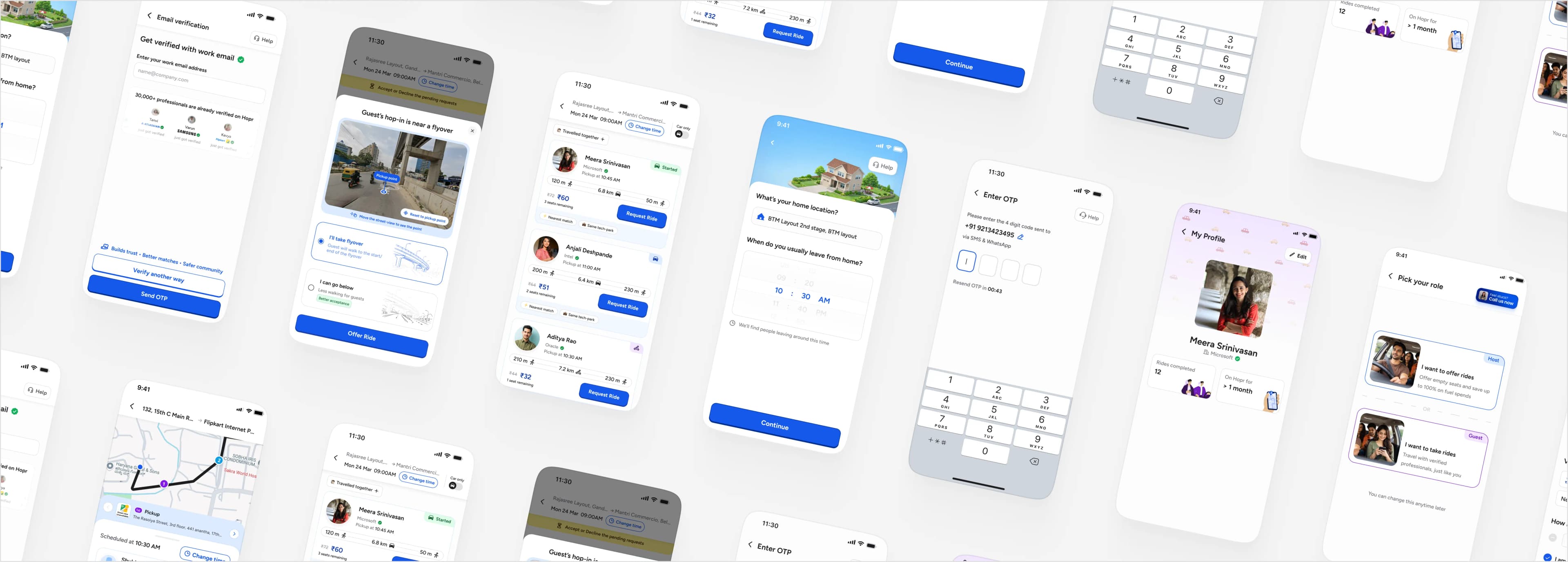
Spatial staging node mapping and in-cabin ramp countdown interface explorationWhy It Remains "Not Shipped" (Pilot Evaluation)
Despite saving an average of 26 minutes per trip for participating commuters, the feature was formally classified as Not Shipped (Shelved Pilot) due to severe real-world infrastructure and regulatory constraints:
- Unpredictable Enforcement: Traffic police frequently changed barricade positions and restricted access to service-lane pull-in pockets during high-security VIP convoys or road maintenance.
- Pedestrian Safety Risks: During monsoon rains, pedestrian walkways leading to ramp staging zones flooded, forcing riders to walk along high-speed expressway slip roads—an unacceptable safety hazard.
- Regulatory Ambiguity: Municipal highway authorities expressed concern that regular carpool congregating near ramps could cause micro-congestion during rush hour peaks.
Designated Ramp Pocket Pickups vs. Doorstep Service Roads
GraveyardRationale: Unresolvable safety risks for pedestrians on unpaved highway shoulders
While the time savings were spectacular, the physical risk of pedestrians waiting near high-speed expressway ramps in poor weather conditions did not meet Hopr's strict safety standards. We shelved direct ramp pickups in favor of dedicated transit hubs within corporate tech parks.
Pre-Ramp Tech Park Perimeter Drop-off Hubs
ShippedRationale: Delivered 80% of the flyover time savings with zero pedestrian danger
Instead of using public highway ramps, we partnered with private tech parks situated at the mouth of expressways. Commuters walk through private park security gates to board cars in controlled driveways before hitting the highway.
“Great product design sometimes means having the discipline to say no. Shaving 25 minutes off a commute is meaningless if you put a pedestrian at risk on a highway ramp.”
Lasting Contributions to Hopr's Platform
Although Flyover Hop-ins was not deployed as a general consumer feature, its spatial staging algorithms, strict geofence countdown logic, and pre-ramp abort protocols became the technological foundation for Hopr's corporate campus dispatch hubs.