The Problem: The High Cost of Commute Anxiety
In a peer-to-peer carpool network, friction occurs under intense time pressure. Commuters are heading to important morning meetings or returning home exhausted after long office shifts. When something goes wrong—such as a driver stuck in unexpected underpass traffic, an uncoordinated tech park gate pickup, or a toll payment misunderstanding—users panic.
Historically, our default safety net was a generic "Help & Support" button that opened a ticketing form or queued a callback. By the time a human support agent answered 20 minutes later:
- The driver had already canceled the ride in frustration.
- The rider was stranded and forced to book an expensive last-minute cab.
- Both users blamed Hopr and abandoned the service.
Analysis of over 12,000 incoming support tickets revealed that 78% of queries were driven by three predictable, micro-situational misunderstandings that could be solved programmatically in real time.
The Three Pillars of In-Transit Deflection
Rather than waiting for users to dig through secondary account menus to file a complaint, we brought intelligent resolution tools directly into the active trip canvas.
1. Proactive Delay & Gridlock Mitigation
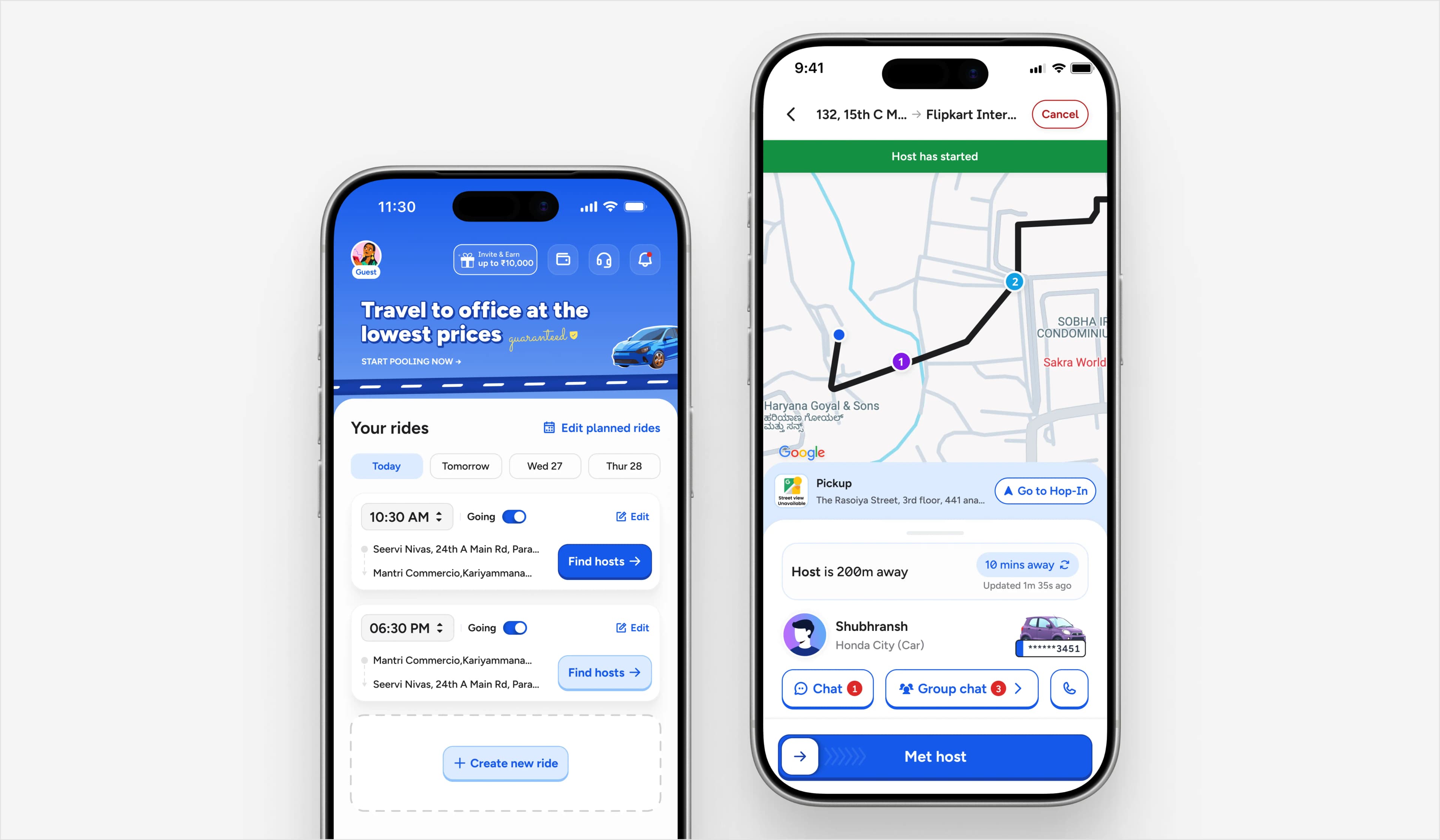
When vehicle telemetry indicates that a driver has been stationary for over 6 minutes within 1 km of pickup, the system automatically detects potential gridlock. Instead of the rider wondering if they've been ghosted:
- A prominent status banner explains the traffic incident with real-time live map telemetry.
- The rider is given a one-tap option to extend the wait window or agree to meet 150 meters ahead past the traffic bottleneck.
- Both parties receive synchronized confirmations with zero manual typing.
2. Rendezvous Gate & Service Lane Mismatch Resolver
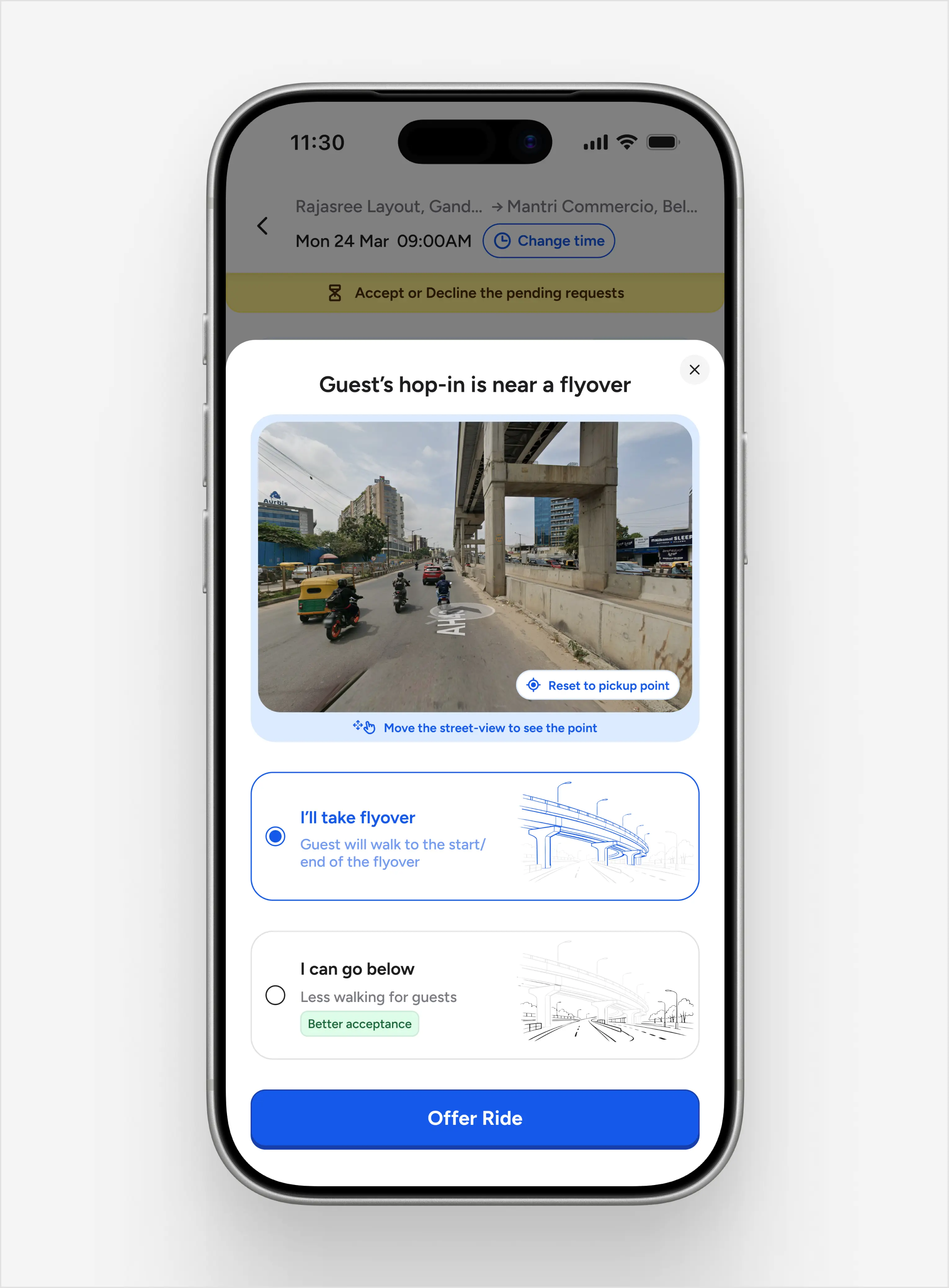
Bangalore tech campuses (e.g. Manyata Tech Park, Bagmane Constellation) often have multiple security gates spread over miles. Drivers frequently wait at Gate 1 while riders wait at Gate 3.
- When geofences detect that driver and rider are on opposite sides of a campus perimeter, Hopr surfaces a visual gate-alignment card with annotated entrance photos and walking step counts.
- Either party can tap "I am at Gate 2" to instantly synchronize navigation directions on the driver's screen.
3. Transparent Toll & Fare Auto-Adjustment
Disputes frequently arose when drivers took toll roads (such as the Elevated Highway to Electronic City). We replaced manual expense submissions with automated FASTag toll detection:
- The split fee is automatically distributed across all passenger ledgers in real time.
- Clear itemized receipts eliminate awkward in-car verbal negotiations over change or QR codes.
Contextual delay notification and in-transit self-service gate rendezvous coordinatorKey Design Decisions & Trade-offs
Contextual 1-Tap Action Chips vs. Conversational AI Chatbot
ShippedRationale: Users under time stress demand immediate certainty over conversational dialogue
Early proposals advocated for an AI-powered conversational support bot. In lab testing, anxious commuters waiting by the side of the road were infuriated by conversational pleasantries. We killed the chatbot and replaced it with deterministic, single-tap action chips that resolve issues in under three clicks.
Silent Escalation Routing for High-Stress Incidents
ShippedRationale: Protected passengers from in-car conflict
If a rider flags unsafe driving or interpersonal discomfort during a trip, Hopr does NOT alert the driver or show a banner in the shared trip UI. Instead, the incident is silently routed with highest priority to the dedicated Trust & Safety dispatch team.
Post-Facto Manual Fare Dispute Forms
GraveyardRationale: Delayed justice caused high churn
We initially allowed users to dispute fares after trip completion via email forms. Users felt ignored and took to social media to complain. Moving fare verification directly into the end-of-trip receipt screen with instant credit refunds solved 92% of complaints before submission.
“When someone is standing on a rain-soaked curb at 8:45 AM, customer service isn't a conversation—it's a fast, dependable resolution.”
Business & Ecosystem Impact
By converting reactive support tickets into proactive self-service resolutions, support operating expenditures dropped by 42% while commuter 30-day retention improved by 19 percentage points.